

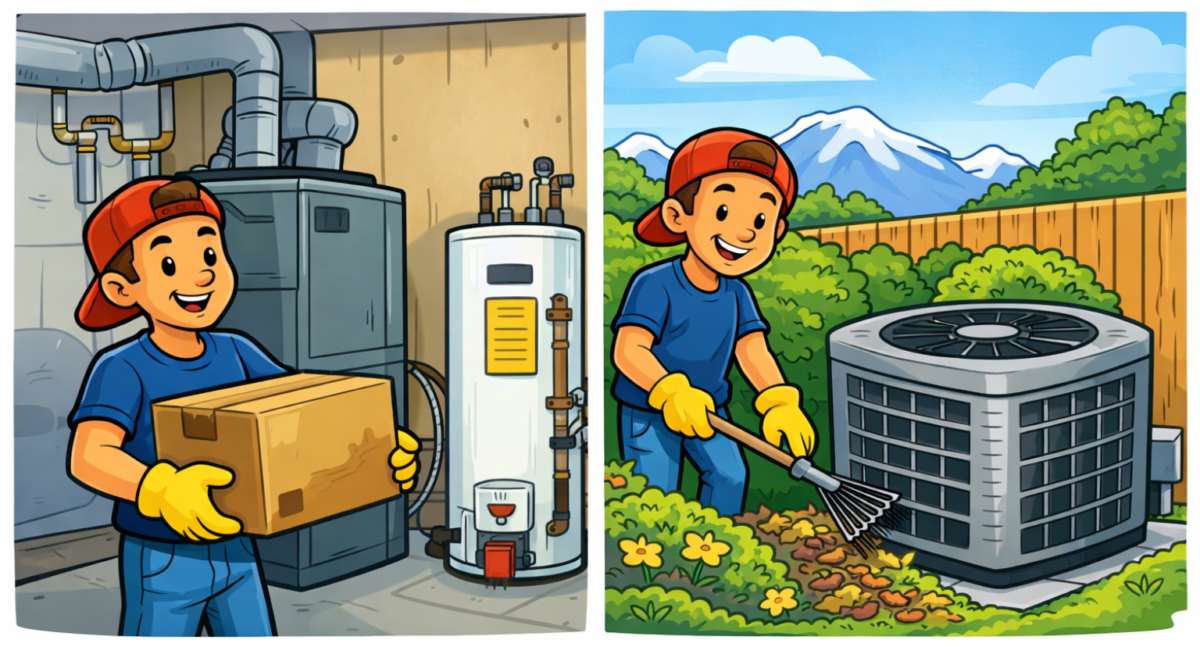
Spring cleaning usually starts with closets, garages, and yard work, but the areas around HVAC equipment often get overlooked. In Great Falls and across Central Montana, that matters because furnace rooms collect dust during dry winters, outdoor units catch windblown debris, and spring can quickly turn into smoke and cooling season.
Homeowners can safely do a lot of useful cleanup without taking equipment apart. The goal is simple: clear space, improve airflow, reduce dust and debris, and avoid the common mistakes that lead to damage or service calls.
Table of Contents
Why spring cleanup matters
A furnace room that slowly turns into a storage area is more than a housekeeping problem. Boxes, paint cans, rags, pet food, and seasonal items often end up too close to furnaces and water heaters. The National Fire Protection Association advises keeping anything that can burn at least three feet away from heating equipment.
Airflow matters too. Furnaces, water heaters, and outdoor cooling equipment need open space to operate properly. Dust buildup, blocked openings, clutter, and leaves around an outdoor unit can all make the system work harder. ENERGY STAR also recommends keeping indoor and outdoor equipment clean and clear of debris for better performance.
How to safely clean around a furnace
Start with the space around the furnace, not the inside of it. Remove stored items, especially cardboard boxes, paper products, paint, cleaning chemicals, fuel containers, and anything flammable. A three-foot buffer is a good rule because it improves safety and makes future service easier.
Once the clutter is gone, vacuum loose dust from the floor and wipe nearby surfaces. Do not open furnace panels, brush dust into the burner area, or spray water or cleaners near the equipment. Furnaces contain electrical parts, gas connections, and safety controls that should stay dry and undisturbed.
It is also a good time to check the filter. In many Great Falls homes, spring is when you find a filter that handled a full winter of dust and is ready to be replaced. Homes that dealt with pets, remodeling dust, or wildfire smoke often need even closer attention.
How to clean safely around a water heater
Water heaters are easy to ignore until something leaks or stops working. Spring is a good time to clear clutter, sweep or vacuum around the base, and make sure stored items are not crowding the burner compartment, venting, or controls.
If you have a fuel-burning water heater, look for obvious warning signs instead of trying to fix anything yourself. The CDC recommends making sure gas appliances are vented properly, as blocked or damaged venting can create carbon monoxide risks. Rust flakes, scorch marks, moisture, or a loose-looking vent are all reasons to stop and schedule service. If you smell gas, leave the area and follow emergency safety procedures.
How to clean around an outdoor AC or heat pump unit
Outdoor units are where people sometimes do too much. Aggressive cleaning can bend fins, force debris deeper into the coil, or soak electrical components. The safer approach is gentler.
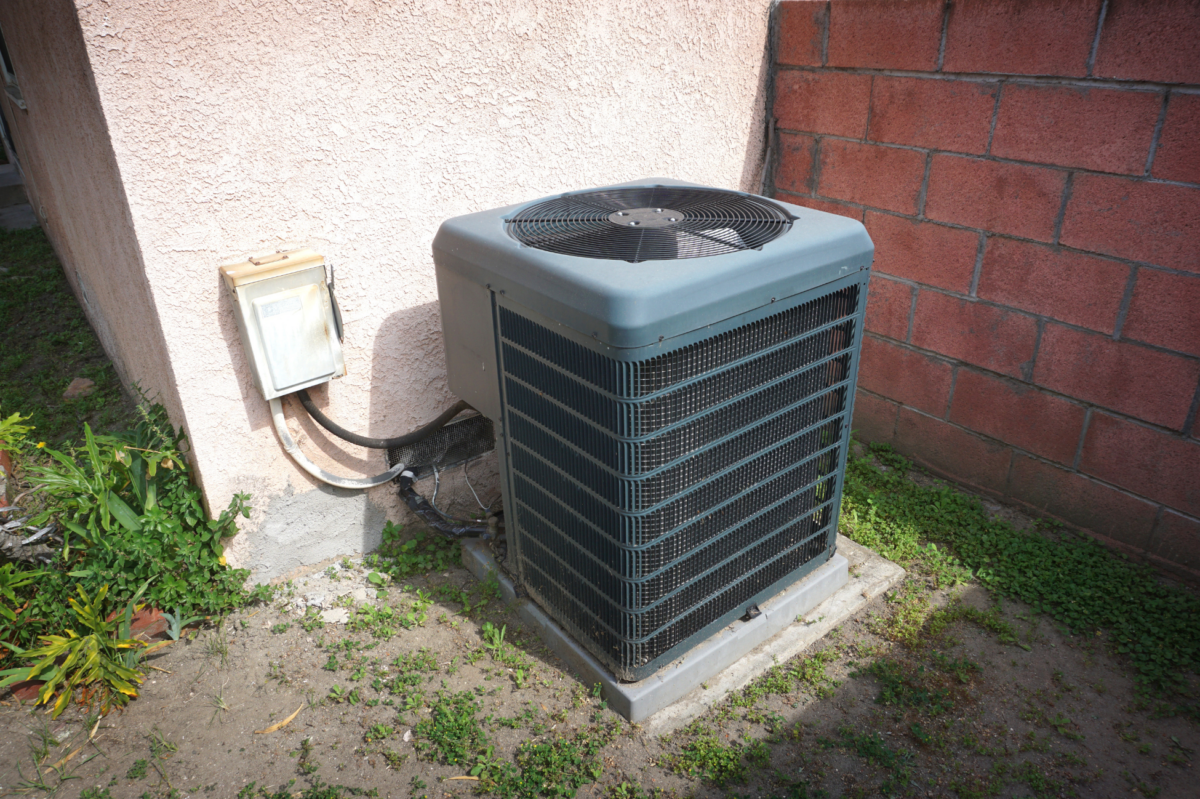
If you are doing more than simple debris pickup, shut off power at the disconnect first. Remove leaves, sticks, grass clippings, and trash from around the base by hand. Trim back weeds and shrubs so the unit has room to breathe.
For surface dirt, use a soft brush or gentle rinse, not a pressure washer. High pressure can flatten coil fins and reduce airflow. In Montana yards, cottonwood, spring winds, and lawn debris can build up fast, so light cleanup every few weeks is usually better than one aggressive cleaning later.
What not to do
Do not store combustible items next to a furnace or water heater. Do not spray water or cleaning products into furnace cabinets, burners, venting, or controls. Do not remove access panels unless the manufacturer specifically lists that step as homeowner maintenance. Do not use a pressure washer on an outdoor coil. Do not lean tools, lumber, or yard waste against an outdoor unit.
Spring cleaning checklist for homeowners
Furnace room
- Remove boxes, paper, paint, rags, and chemicals from the area
- Keep a three-foot clearance around heating equipment
- Vacuum dust from floors and nearby surfaces
- Check the air filter and replace it if dirty
- Leave internal furnace cleaning to a technician
Water heater area
- Clear clutter away from the appliance
- Sweep or vacuum around the base
- Visually check for rust, water stains, or venting issues
- Make sure nothing is blocking combustion air openings or access
- Call for service if you see venting damage, leaks, or corrosion
Outdoor unit
- Pick up leaves, sticks, and trash around the unit
- Trim vegetation back to improve airflow
- Gently rinse or brush exterior debris if needed
- Never use a pressure washer on the coil
- Keep the top and sides free of stacked items or yard debris
When cleanup should turn into a service call
Spring cleaning is maintenance around the equipment, not repair work on the equipment. If you notice rusted venting, soot, water around the furnace or water heater, unusual noises, a damaged outdoor coil, weak cooling, or unusually dirty filters after smoke or dust events, it is time to get the system checked.
For homes in Great Falls, Black Eagle, Fort Benton, Belt, Choteau, and nearby areas, spring is a smart time to handle this before summer demand ramps up. It is easier to deal with an airflow problem, dirty coil issue, or safety concern before the first hot stretch of the season.
A cleaner utility space helps your HVAC system too
A clean furnace room will not fix every heating or cooling problem, but it does make your system safer, easier to service, and less likely to struggle because of clutter and debris. The same is true outside. Keeping an outdoor unit clear helps it move air the way it was designed to.
If you want a professional set of eyes on your system after your spring cleanup, Halcro Heating and Cooling can help!