

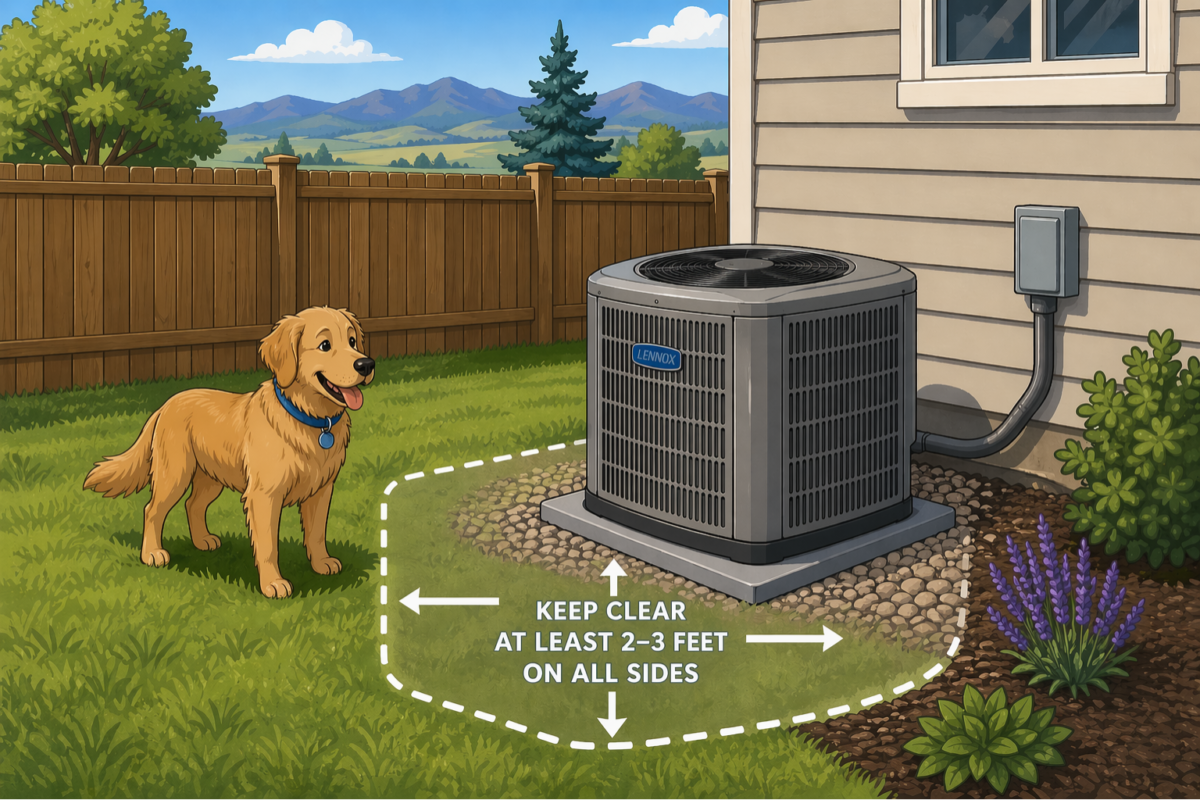
If you have a dog, you probably already know the yard has favorite spots. What many homeowners do not realize is that an outdoor AC or heat pump can become one of them. One of the most common examples is dogs peeing on AC units, which can lead to corrosion, reduced airflow, and avoidable repair costs over time.
In Great Falls and across Central Montana, outdoor HVAC equipment already deals with wind, dust, temperature swings, and seasonal debris. Add repeated pet exposure on top of that, and the wear can happen faster than many people expect. The good news is that a few simple habits can help protect your equipment without making your yard feel like a construction zone.
Table of Contents
Why Pet Damage to Air Conditioner Systems Happens
Your outdoor AC or heat pump unit is built for weather, but it is not built to be a bathroom target. Dog urine is especially tough on the thin metal fins and lower portions of the coil, and repairs can get expensive over time. When a dog marks the same spot over and over, the moisture and salts can slowly eat away at the metal and protective coatings.
The coil is what helps the system remove heat. When it becomes corroded, bent, or clogged with grass, fur, or dirt, the unit has to work harder to cool your home. Pets can also create other problems around outdoor HVAC units by digging near the pad, pushing toys or storage against the cabinet, or leaving hair and debris that make cleaning harder.
What Dogs Peeing on AC Units Can Do
The “dogs peeing on AC units” problem sounds funny until you see the damage up close. The lower section of the coil often takes the hit first, and in mild cases you may notice discoloration or rust. In more serious cases, the fins can break down enough that airflow and heat transfer suffer. A quick internet search can show you all kinds of horror story images.
A homeowner may not notice anything at first, which is part of what makes this issue expensive. Damage from repeated pet urine usually builds gradually, and rinsing the unit once will not fix the problem if the pet keeps returning to the same spot. The real fix is prevention.
Signs Your Outdoor Unit May Be Taking Pet Damage
Watch for rust or discoloration near the base, matted fur and debris, bent fins, chewed insulation, digging around the pad, or reduced cooling performance. If your AC starts running longer than usual or struggles on warmer days, the outdoor coil may need attention.
Outdoor AC Unit Protection Tips for Dogs and Other Pets
The best approach is usually a combination of airflow-friendly protection and a little behavior management.
Add a small barrier, but give the unit space
A low decorative fence or protective screen can work well if it is installed with enough clearance for airflow and service access. This kind of outdoor AC unit protection can help discourage marking without creating airflow problems. The key is not boxing the unit in. Generally, this means at least 2-3 feet on all sides and at least 5 feet of overhead clearance, and always make sure you leave room for servicing!
Redirect the habit
If your dog keeps marking the condenser, encouraging a different bathroom area can make a big difference, especially in fenced backyards where the AC sits near the usual route.
Keep the area clean and rinse gently when needed
Pet hair, weeds, and windblown debris all add up, so keep the space around the unit trimmed and tidy. If the unit has been hit by urine, a gentle rinse with water can help reduce residue. Do not use a pressure washer or spray aggressively into the fins as this can cause other problems.
Watch where pet items are placed
Do not lean kennels, pet supplies, toys, or yard tools against the unit. Even a few inches of blocked airflow can matter.
Montana Conditions Make Routine Checks More Important
Outdoor HVAC maintenance in Montana is not just about pets. In our area, equipment also deals with dry dust, spring debris, wildfire smoke, and wide temperature swings. A unit with light pet damage can become a bigger problem faster because the coil is already working in a tougher environment.
In our area, we may see a unit with some corrosion at the base, cottonwood buildup, and restricted clearance from weeds or fencing. Together, those issues can shorten equipment life and reduce efficiency, which is why it helps to check the outdoor unit before peak cooling season.
When to Call for Service
If you notice heavy corrosion, visible coil damage, reduced cooling, odd noises, or signs that the pad or lines have been disturbed, it is worth having the system looked at. A technician can tell the difference between surface wear and damage that is starting to affect performance, and can help you choose protective options that will not hurt airflow.
The Bottom Line
To protect outdoor HVAC equipment from pets, the plan does not have to be complicated. In most homes, the biggest wins come from stopping repeated marking, keeping the area clean, and making sure any barrier still allows the unit to breathe.
If your dog has started treating the AC unit like part of the fence line, you are not the only one. It is a common issue, and a quick check now is a lot easier than dealing with corrosion and repair costs in the middle of summer.
If you want help checking an outdoor unit for pet-related wear, airflow issues, or coil damage, Halcro Heating and Cooling can take a look. We serve Great Falls and surrounding communities within about a 100-mile radius, and we are happy to give straightforward advice on what needs attention and what can wait.