

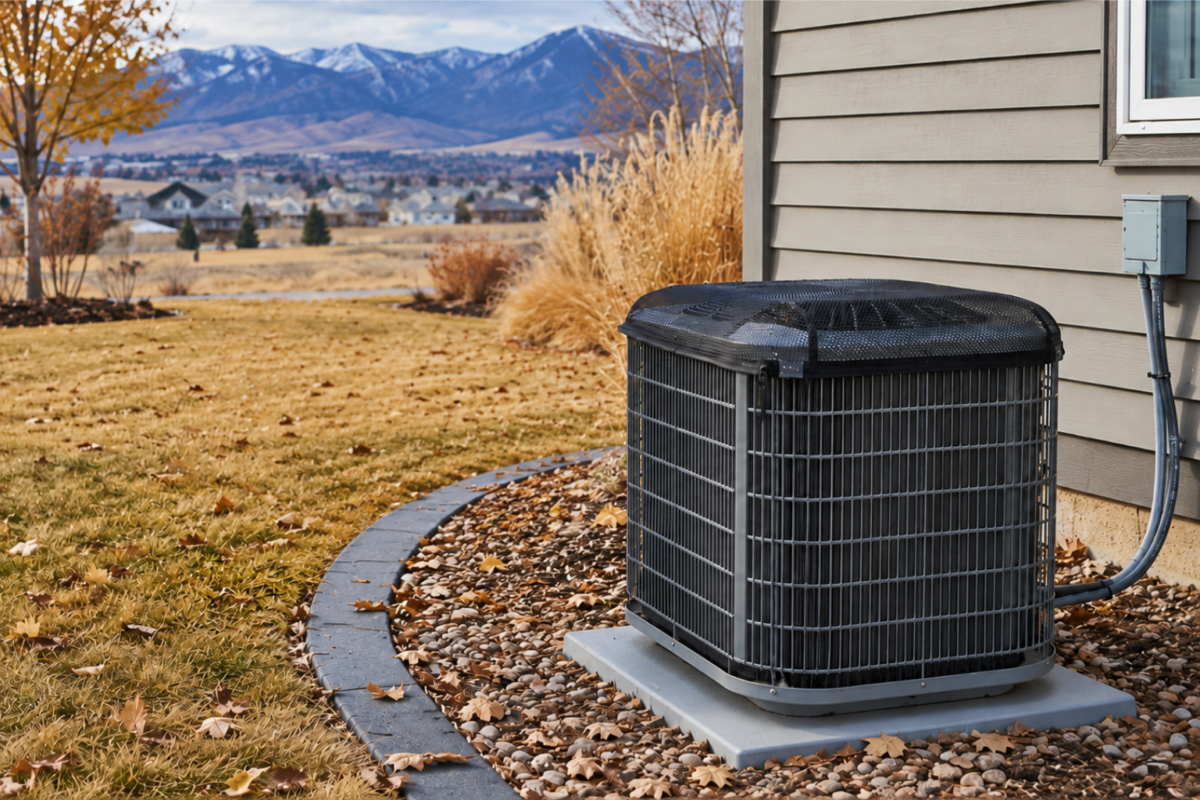
An outdoor air conditioner sits through rain, snow, wind, leaves, and big temperature swings here in Great Falls. It is understandable that many homeowners wonder whether an outdoor AC unit cover would help protect their investment. After all, we cover patio furniture and grills in winter, so why not the AC?
The answer depends on your system, what you are trying to protect it from, and the type of cover used. In many cases, a full cover is unnecessary and can create new problems. Limited protection from leaves, branches, or roof runoff can make sense in the right situation.
Table of Contents
Outdoor AC Units Are Designed for Montana Weather
A central air conditioner’s outdoor unit (condenser) is built to stay outside year-round. Its cabinet, coil, and wiring are designed to handle rain, snow, freezing temperatures, and summer heat. Most manufacturers note that modern AC units do not need winter covers.
That doesn’t mean the unit is indestructible. Heavy falling ice, roof runoff, cottonwood seeds, grass clippings, and large amounts of leaves can still cause trouble. In Great Falls and the surrounding area, strong wind can also pile dry leaves and debris against one side of a condenser even when there are no trees directly above it.
The real question is not “Should I cover my AC?” but “What problem am I trying to prevent?”
The Pros of Covering an Outdoor AC Unit
Keeps Leaves Out
A breathable top or mesh cover can reduce leaves, seeds, and twigs entering the fan opening when the system is off. This is helpful under trees or in windy areas.
It can make spring cleanup easier, but you should still inspect the unit before use.
Helps Protect from Falling Ice
Some homes have condensers under roof edges where icicles or snow chunks may fall. A top shield can help prevent physical damage to the fan guard, cabinet, or coil.
A purpose-built shelter or securely installed top cover is usually a better solution than wrapping the entire condenser. It should be installed with enough room above and to the sides for airflow and not redirect water or snow onto the unit.
Cosmetic Protection
A breathable cover may reduce stains from sap, bird droppings, or scratches. This is mainly cosmetic since the cabinet is already built for outdoor exposure.
The Cons of Covering an Outdoor AC Unit
Moisture Trapping
Tight plastic or vinyl covers can trap moisture from snowmelt and condensation. This can encourage rust instead of preventing it, which is why many manufacturers discourage full winter wraps.
Pests Problems
Covered units can attract mice seeking shelter. It blocks wind, creates a darker enclosed space, and may trap leaves or grass that can be used for nesting material. Rodents may damage wiring and insulation, leading to costly repairs when cooling season begins.
Risk of Forgetting Removal
One of the biggest risks is also one of the simplest. A homeowner, family member, house sitter, or smart thermostat may turn on the air conditioner while the cover is still installed.
An air conditioner needs to move a large amount of air through the outdoor coil and discharge it through the top. A cover that blocks the sides or fan opening can cause the system to overheat, shut down, or suffer equipment damage.
Place a reminder on the thermostat or switch off cooling mode for the season when using any winter cover. The cover must be removed and the unit inspected before the air conditioner is operated.
Never Cover an Operating Heat Pump
Before purchasing a cover, confirm whether the outdoor unit is an air conditioner or a heat pump. The two can look nearly identical, but a heat pump may operate throughout the winter to heat the home.
A heat pump needs constant airflow whenever it runs, and covering them can interfere with operation and defrost cycles. Most can be used year around for either cooling or heating.
Do not cover a heat pump. Instead, keep snow and debris cleared and follow manufacturer clearance guidelines.
Not sure which system you have? Check the thermostat for an “emergency heat” or “auxiliary heat” setting, look up the outdoor unit’s model number, or ask an HVAC technician to identify it.
Full Cover, Top Cover, or No Cover?
Most air conditioners do not need a cover at all. Keeping the area clear and inspecting the unit after major storms is usually enough.
A breathable top or mesh cover may help in heavy leaf or debris areas. A full fitted cover should generally be avoided unless specifically recommended by the manufacturer.
Never improvise with a plastic tarp. If you use any cover, it should be designed for HVAC equipment, securely attached against Montana wind, and removed before spring operation.
Simple Winter Protection Checklist
Instead of completely wrapping your condenser, homeowners can take a few practical steps:
- Clear leaves and debris from around the unit.
- Trim nearby branches to keep unit clear.
- Check for roof runoff, icicles, or drifting snow.
- Maintain open space around the sides.
- Do not stack or store items on or against the equipment.
- Inspect the unit before spring start up.
- Schedule service if the coil is packed with debris or damaged.
Clean coils help the system run more efficiently, making maintenance more valuable than covering. ENERGY STAR includes condenser coil cleaning as part of recommended HVAC maintenance.
For more seasonal guidance, read our article on what to check before turning on your AC or heat pump, available through the Halcro Heating and Cooling homeowner resource section. You can also explore our Great Falls cooling services for help with maintenance, repairs, or system replacement.
The Bottom Line for Great Falls Homeowners
Most outdoor AC units do not need a winter cover. They are built for outdoor conditions, and full covers can trap moisture, attract pests, or be forgotten at startup.
Limited top protection can be helpful when there is a clear risk from leaves, falling branches, or roof ice. The safest choice depends on the unit’s location and manufacturer’s instructions.
If you are unsure what type of outdoor unit you have or whether its location needs additional protection, we can take a look and give you a straightforward recommendation. We serve homeowners in Great Falls and communities within approximately 100 miles, including Belt, Cascade, Fort Benton, Fairfield, Ulm, Vaughn, and surrounding areas.
Have questions about protecting, cleaning, or maintaining your outdoor HVAC equipment? Contact Halcro Heating and Cooling to schedule service or request an honest assessment. We will explain what your system needs without recommending unnecessary products or work.