

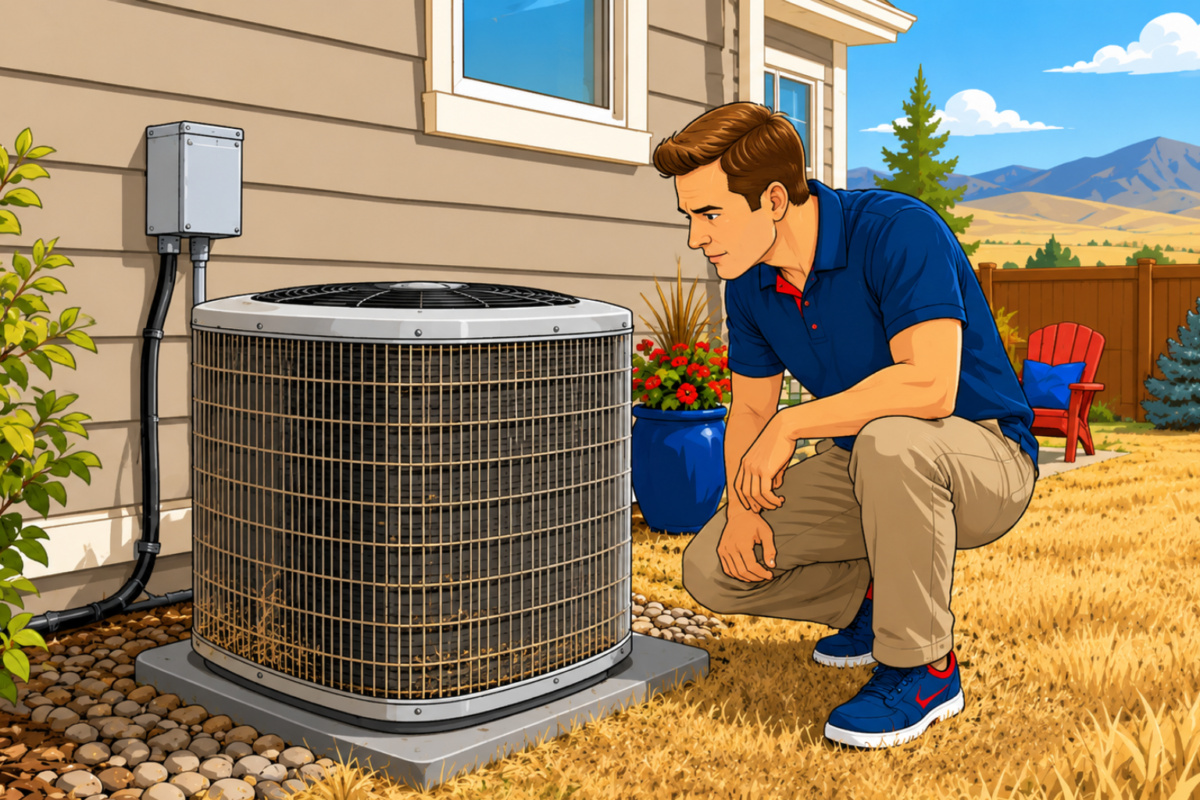
Most homeowners remember to change the filter inside the house. The outdoor AC unit, though, is easy to forget. It sits outside through central Montana wind, cottonwood season, lawn mowing, dust, wildfire smoke, leaves, and spring cleanup. It may look fine from the sidewalk, but if the fins around the outside are packed with debris the system may be working much harder than it should.
A homeowner recently made a great point online after taking the cover off their round outdoor AC unit for the first time in three years. They were shocked to find the fins so covered that very little air could pass through. After watching a video, they were able to clean the unit, but they also wondered why this is not talked about more. From a professional HVAC point of view, it absolutely should be. A shout our and thank you to Dave for the reminder!
A dirty outdoor coil can reduce airflow, increase run time, raise cooling costs, and add stress to the compressor. In some cases, ignored maintenance can contribute to larger failures, especially during a hot stretch when the system is already under pressure. Here is what Great Falls homeowners should know before cooling season gets serious.
Table of Contents
What the Outdoor AC Unit Actually Does
Your outdoor AC unit is not just a metal box with a fan in it. It is the part of the system that releases heat from inside your home to the outdoors. The indoor system absorbs heat from the air in your house, then the refrigerant carries that heat outside. The outdoor coil and fan help get rid of that heat.
For that process to work well, air needs to move freely through the coil fins. Those thin metal fins create a large surface area so heat can transfer out of the refrigerant. When the fins are clean and open, the system can breathe. When they are covered with dust, cottonwood, pet hair, leaves, or grass clippings, the system has to fight for airflow.
That is when a simple maintenance issue can start acting like a bigger mechanical problem. The AC may run longer, struggle to keep up, or feel like it is losing capacity. In some homes, the thermostat keeps calling for cooling, but the equipment cannot remove heat efficiently enough to satisfy the house.
Why Dirty AC Fins Are a Bigger Deal in Montana
In Great Falls and the surrounding area, outdoor AC units deal with a mix of conditions that can build up quickly. Year around wind can push dust and other debris into the coil (even with a cover on). Cottonwood and seed fluff can mat against the outside. Dry summers can bring wildfire smoke with fine particles that settle on surfaces. Lawn clippings are another common problem, especially when grass is blown directly toward the unit.
This is one reason a homeowner yearly check matters. A unit may not look terrible from a few feet away, but the coil can still be restricted. We have seen systems where one side of the outdoor unit looked mostly clear, while the side facing prevailing wind, a dryer vent, shrubs, or a mowing path was packed enough to noticeably reduce airflow.
That kind of buildup does not always cause an immediate breakdown. Sometimes it quietly makes the unit run longer all summer. That means more wear, more energy use, and less comfort on the hottest afternoons.
What Can Happen If the Outdoor Coil Is Not Cleaned
When airflow through the outdoor coil is restricted, the system has a harder time releasing heat. That can cause higher operating pressures and higher temperatures inside the equipment. Over time, that extra strain can be hard on electrical components, the fan motor, and especially the compressor.
The compressor is one of the most expensive parts of an air conditioning system. It is also a part you do not want to stress unnecessarily. If it fails, your going to be seriously considering whether its better to repair or replace do to cost.
Dirty coils can also make a homeowner think the AC is undersized or low on refrigerant when the first problem is actually airflow. That is why cleaning and inspection should come before jumping to bigger conclusions. A professional tune up looks at the full picture: coil condition, electrical readings, refrigerant performance, temperature split, airflow, drainage, and whether the equipment is operating safely.
Can Homeowners Clean Their Own Outdoor AC Unit?
In many cases, homeowners can safely do basic cleaning around the outdoor unit. The key is knowing where the line is between simple maintenance and work that should be left to a professional.
Good homeowner maintenance includes clearing leaves, grass, weeds, and loose debris from around the unit. Keep plants, storage, fencing, and yard items far enough away that the unit can breathe. The U.S. Department of Energy recommends keeping the area around the condenser clean and trimming foliage back at least two feet to allow proper airflow. Gentle removal of debris from fins is fine (more guidance below)
Be extremely careful if you remove panels or reach inside the unit. It is easy to accidentally bend refrigerant lines and damage electrical compartments or wiring. Do not try to straighten badly damaged fins unless you are trained and know what you are working around. The outdoor unit has electrical components, sharp edges, and refrigerant circuits that can be damaged by well-meaning DIY work (or damage the DIY worker).
A Simple Outdoor AC Cleaning Checklist
Here’s a video we found to go along with the checklist below:
Before the first real cooling weather, take a few minutes to look at the outdoor unit.
- Turn off the thermostat, then shut power off to the outdoor unit at the disconnect if you are going to rinse it.
- Check the space around the unit for clear airflow on all sides and above the unit. Trim back shrubs, move stored items, and avoid placing decorative covers, fencing, or planters too close. If you mow near the unit, aim grass discharge away from it.
- Look for debris on the fins. Clear loose debris by hand or with a soft brush, being careful not to crush the fins.
- Gently rinse the outside of the coil with a garden hose at low pressure after shutting power off to the unit.
- Do not use a pressure washer as it can bend the fins and damage the coil.
- Avoid harsh chemicals unless the equipment manual specifically allows them. Some cleaners are not appropriate for certain coil types and cause damage.
After a gentle rinse, give the unit time to dry and make sure everything looks normal before restoring power. If you see crushed fins, oily residue, ice, damaged wiring, loud noises, or the unit still does not cool well after cleaning, it’s time to call for service.
Why Professional Maintenance Still Matters
Some AC problems hide behind normal operation. A unit can run and still be drawing too much amperage. It can cool and still have a weak capacitor. It can look clean outside while the inside of the coil is partially blocked. It can also have airflow problems inside the home that no amount of outdoor rinsing will fix. During a professional maintenance visit, a technician can check for these “hidden” issues.
The goal is to help you catch simple problems early. A little homeowner cleaning and a professional inspection every few years can often prevent a frustrating no-cool call when the temperature jumps.
When to Call HHC
Call for service if your AC is running longer than usual, struggling to keep up, making new noises, cycling on and off quickly, blowing warm air, or showing ice on the refrigerant lines. You can also schedule a professional check if you are not comfortable safely cleaning the equipment yourself.
Halcro Heating and Cooling helps homeowners in Great Falls and communities within about a 100-mile radius keep their cooling systems running safely and efficiently. We can inspect the outdoor unit, clean what needs to be cleaned, and give you an honest explanation of what we find. No scare tactics, no pressure, just clear information so you can make a good decision for your home.