

If you have been shopping for home comfort upgrades around Great Falls, you have probably heard about “mini splits” from a neighbor, a builder, or a friend who just remodeled a basement. They are showing up in older homes, new additions, detached garages, and even some full-home installs. But Montana is not Florida. We deal with dry winters, big temperature swings, and the occasional stretch where it feels like the wind never stops. So the real question is not “Are mini splits good?” it’s “Where do mini splits make sense here?”
This post breaks down what a mini split is, how it works, where it shines in our region, and a handful of misconceptions we hear a lot. It’s a bit long, so feel free to use the Table on Contents to skip around to find the information you’re looking for.
Table of Contents
What a mini split is (in plain language)
A mini split is a heating and cooling system that moves heat instead of creating it by burning fuel. It uses an outdoor unit (the condenser) connected to one or more indoor units (heads) by small refrigerant lines and electrical wiring. Because there is no ductwork needed, many people call them “ductless heat pumps.”
In cooling mode, it works like a traditional air conditioner. In heating mode, it pulls heat from the outdoor air and delivers it inside. That sounds impossible when it is cold, but there is still heat energy in the air even when temperatures are well below freezing. Modern cold-climate mini splits are designed to keep producing heat in colder conditions than older generations could manage.
The big practical benefit is zoning. Each indoor head can be controlled independently, so you can keep a bedroom cooler at night, warm up a basement office during the day, or heat a garage when you are actually using it.
The visible parts of the system
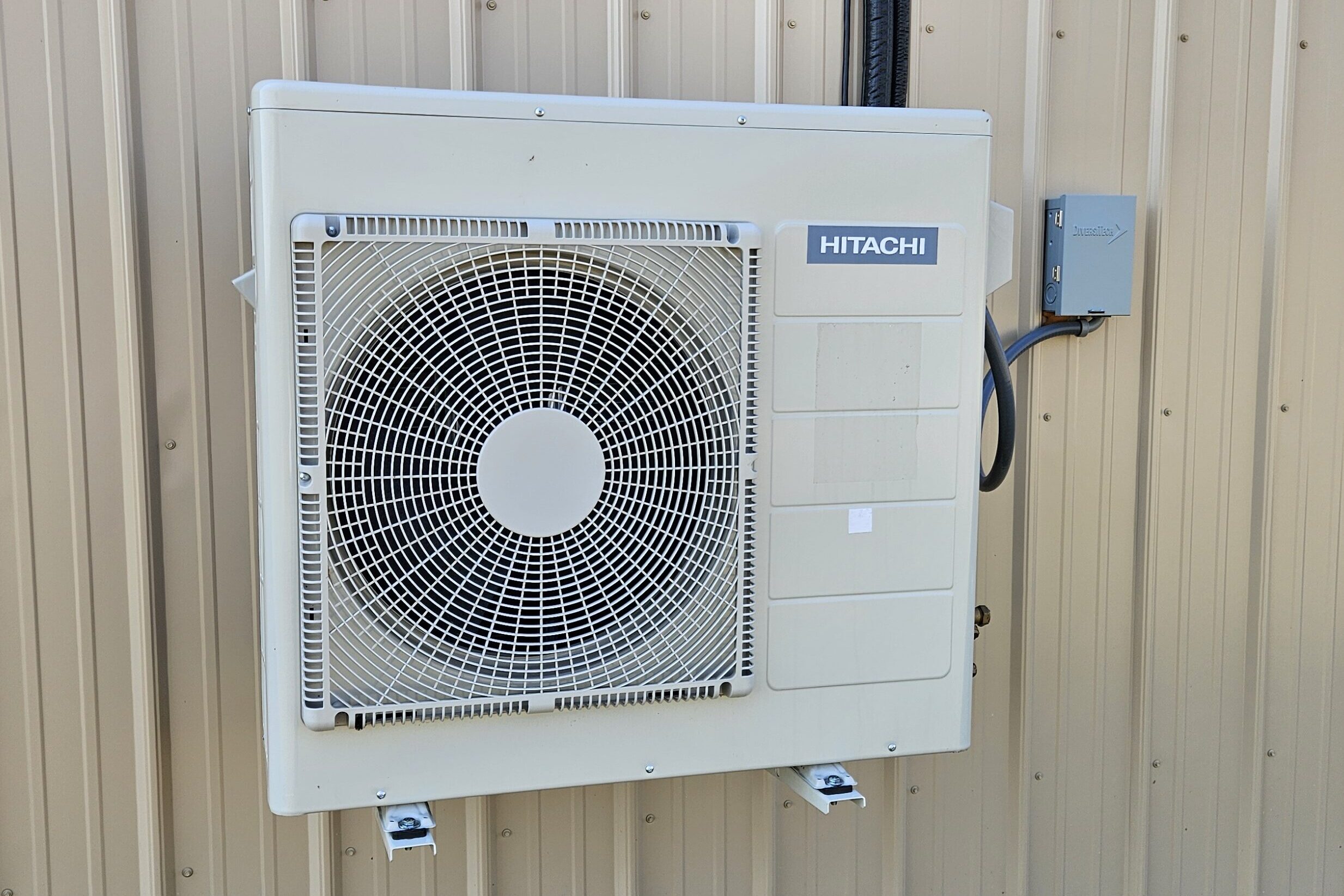
Outdoor unit: Sits outside, similar to an AC condenser. In winter it will run and it will occasionally go into defrost mode, which is normal.
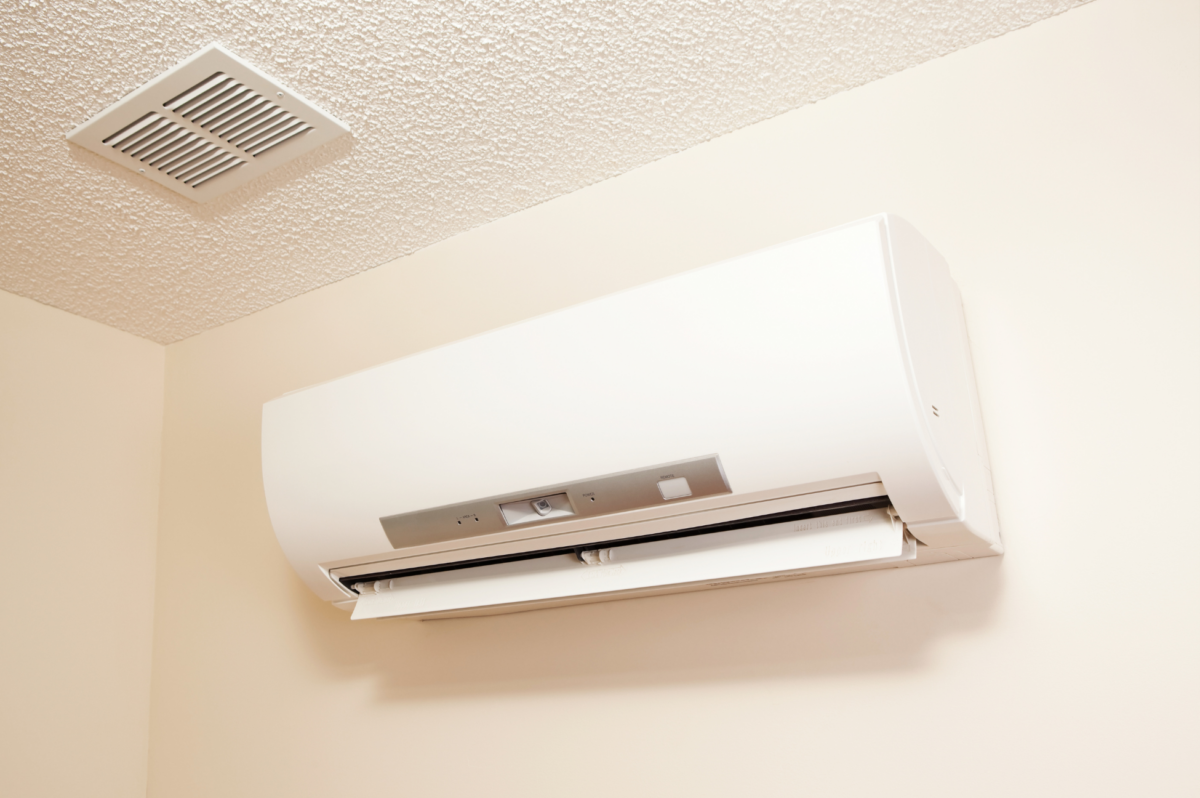
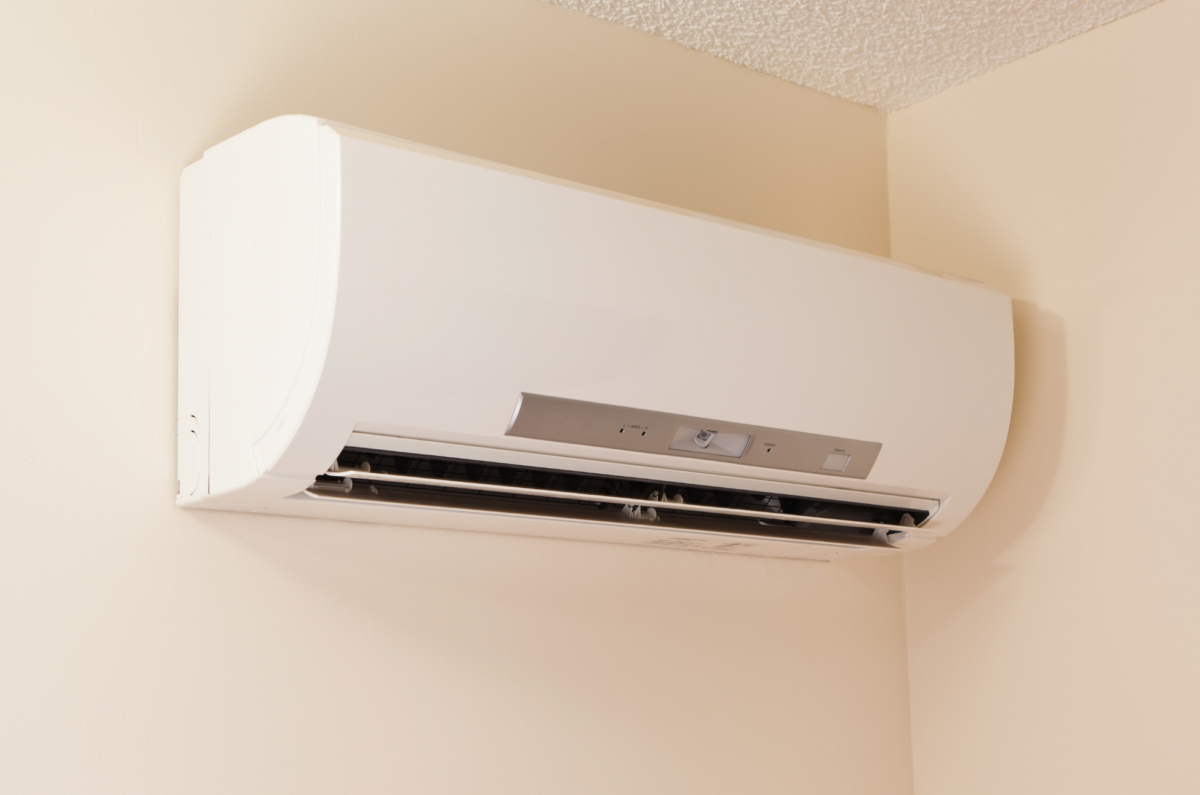
Indoor unit (head): Most people picture the wall-mounted head. There are also ceiling cassettes and slim ducted options that hide in a soffit or attic space.
Line set and drain: The refrigerant lines and wiring run through a small wall penetration. In cooling mode, the indoor unit creates condensate water that needs a proper drain route.
Remote or wall controller: Most mini splits use a remote, and many can integrate with Wi‑Fi controls. Some models can be paired with thermostats, but it depends on the equipment.
Where mini splits work especially well in Montana
Mini splits can be a great solution in our area, especially in and around Great Falls, but they are not one-size-fits-all. Here are the situations where they tend to deliver the best results.
1) Rooms that were never comfortable to begin with
We see a lot of older homes in Great Falls where one room is always cold in winter and stuffy in summer. Sometimes it is a back bedroom over an unconditioned space. Sometimes it is a main-floor room with lots of windows. Adding ductwork is often expensive or impossible without tearing things apart. A mini split can be a clean way to add targeted heating and cooling where the duct system never did a great job.
Picture a second-story bedroom that is consistently 6–8 degrees warmer in summer than the rest of the home. A single-zone mini split can solve that comfort problem without resizing the whole furnace or reworking ducts.
2) Basements, additions, and remodels
Basement remodels are a classic mini split win, especially when the existing furnace is already near its capacity. Running new supply and return ducts correctly can be tough, and undersized duct additions lead to noise and uneven airflow. Mini splits sidestep that.
Additions are similar. If you add a sunroom, a master suite, or a family room, a dedicated mini split zone often makes more sense than trying to stretch the original system.
3) Detached garages and workshops
A mini split can be an excellent garage heater and summer cooler, especially for a shop that you use regularly. Montana garages can swing from deep cold to surprisingly warm, and nobody wants to work in a space that is either freezing or smoky and stagnant.
Two important notes we tell garage owners:
- You still need insulation and air sealing. A mini split cannot fix a leaky, uninsulated garage.
- Placement matters. Outdoor units need to be mounted to handle snow drifting and keep the coil clear.
4) Homes without ductwork (or with ductwork that is not worth saving)
Some homes have electric baseboard heat, boilers with radiant heat, or older duct systems that are undersized, leaky, or poorly designed. In those cases, a mini split can deliver both heating and cooling without rebuilding the entire distribution system.
5) Shoulder seasons and energy efficiency goals
Spring and fall in Montana are unpredictable. It can be 65°F one day and snowing the next. Mini splits are very good at modulating their output and sipping energy when the load is small, which is exactly what shoulder seasons look like.
The U.S. Department of Energy notes that heat pumps can be an efficient way to heat and cool because they move heat rather than generate it. That is why they are increasingly common in energy-conscious upgrades. (Source: U.S. Department of Energy, Energy Saver)
Montana-specific considerations
Cold-climate performance matters
Not all mini splits are equal in winter. The model you choose should be rated for cold climates, with published heating capacity at low outdoor temperatures. Equipment that looks similar on a website can perform very differently when it is 0°F and windy.
Outdoor unit placement matters more here
Snow, ice, and drifting are real issues. Outdoor units should be installed high enough to avoid snow burial and positioned to reduce exposure to roof runoff. In Great Falls, wind can also pack snow into corners that look harmless in summer.
Defrost is normal, but it surprises people
When a mini split heats, the outdoor coil gets cold and can frost up. The system periodically switches into defrost mode to clear the coil. During defrost, you may notice a temporary change in airflow temperature indoors. That is normal operation, not a failure.
Wildfire smoke and filtration
In late summer, Montana wildfire smoke can be brutal on indoor air quality. Mini splits typically have basic washable filters that catch dust, not fine smoke particles. If smoke is a concern, plan for whole-home filtration, a properly sized air cleaner on a ducted system, or portable HEPA units in key rooms. Mini splits can still cool the home during smoke season, but they are not an air purifier.
Common misconceptions
Misconception #1: “Mini splits don’t work when it’s really cold.”
Older ductless systems struggled in deep cold, and that reputation stuck around. Many modern cold-climate mini splits can heat effectively well below freezing, but the details matter. You need the right equipment for our winters, and the home still needs proper sizing and a solid install.
Misconception #2: “One head can heat my entire house.”
Sometimes it can help, but it is rarely the best plan. Heat does not magically move around corners and through closed doors. If you want whole-home performance, you usually need a multi-zone design or a ducted solution, plus a careful load calculation.
Misconception #3: “Mini splits are always cheaper than a new furnace.”
Mini splits can be cost-effective, especially for a single room or a specific problem area. But a full-home multi-zone system can be a significant investment. The right comparison is not “mini split vs furnace,” it is “What problem are we solving and what is the most reliable, efficient way to solve it?”
Misconception #4: “They are maintenance-free.”
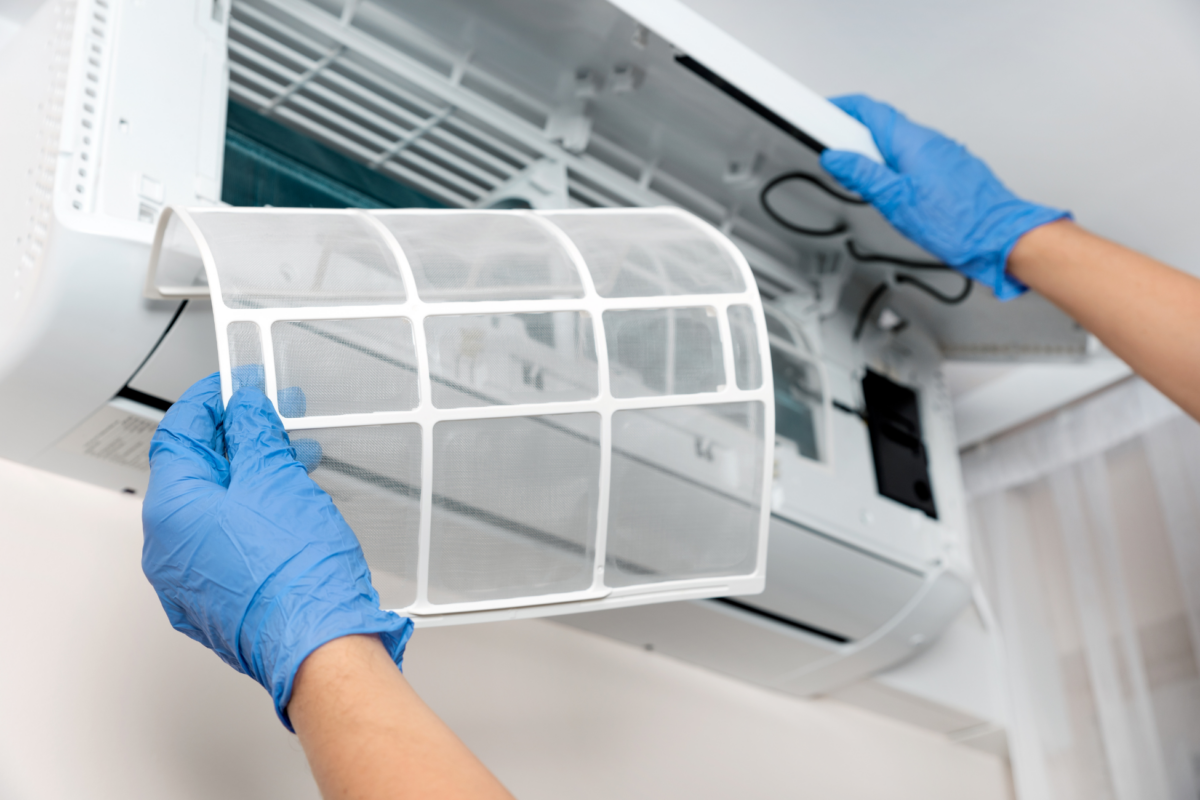
They need maintenance, just like any HVAC system. Filters need to be cleaned regularly. Indoor coils can collect dust and biofilm over time. Outdoor coils need to stay clear of debris, and in winter, they need to stay clear of snow and ice. A quick seasonal check can prevent a lot of frustration.
Misconception #5: “Any installer can put one in.”
A mini split install looks simple until you see the details: correct sizing, proper flare or brazed connections, vacuum and dehydration, condensate management, electrical requirements, and placement that avoids noise and snow issues. A sloppy installation can turn a great piece of equipment into a headache.
Mini splits and your existing heating system: friends, not enemies
In many Montana homes, the best solution is a hybrid approach. A mini split can handle shoulder seasons and provide efficient heating for a bonus room, while a gas furnace or boiler handles the coldest stretches. That can reduce run time on the main system, improve comfort in trouble spots, and give you more control over how your home feels day to day.
If you are considering a mini split in the Great Falls area, the most helpful first step is a simple conversation about the space you want to improve. Are you trying to cool an upstairs bedroom? Heat a garage shop? Make a basement comfortable year-round? The right answer changes based on the goal.
If you are in Great Falls or anywhere within about 100 miles (including places like Ulm, Vaughn, Fairfield, Belt, Fort Benton, and Choteau), we can help you decide whether a mini split is the right tool for the job. We will talk through comfort goals, placement, and realistic expectations, then recommend a setup that fits your home and the way you actually live in it.