

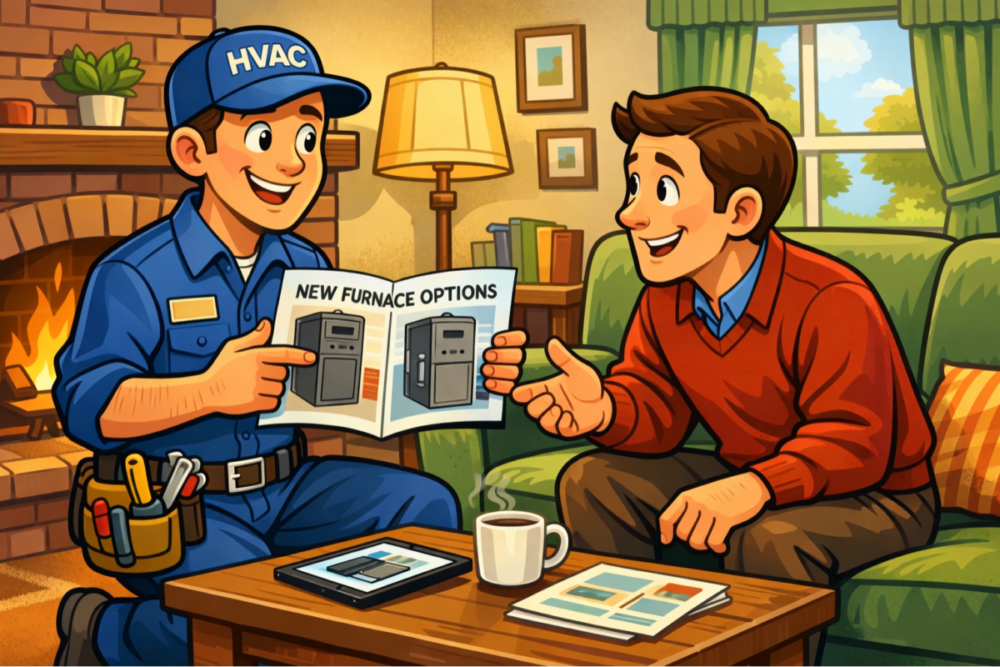
Thinking about a furnace replacement in Great Falls, Montana and not sure if an 80% low efficiency or 95% high efficiency furnace makes more sense for your home and budget? This guide walks through how each option really performs in Montana’s long, dry, windy winters.
Table of Contents
What AFUE (Efficiency Rating) Really Means
AFUE (Annual Fuel Utilization Efficiency) is a lab-rated measurement that estimates how much of the fuel you pay for becomes usable heat in your home.
- An 80% AFUE furnace turns about 80 cents of every fuel dollar into heat and sends roughly 20 cents out the vent as waste.
- A 95% AFUE (or higher) condensing furnace turns about 95 cents of every fuel dollar into heat and wastes about 5 cents.
In simple terms, an 80% furnace sends more heat up the flue than a 95%+ condensing furnace does, but the right choice in Montana is not just about the number on the box. Venting, layout, and local climate all affect what is practical and cost‑effective.
80% Efficient Furnace: Pros and Cons
A standard‑efficiency (around 80% AFUE) furnace can be a smart choice when you want a reliable replacement that fits your home’s existing setup without turning the job into a bigger remodel. Many Great Falls homes already have metal flue venting and a straightforward installation path, so an 80% unit often ties in with fewer surprises.
Why homeowners choose it:
- Lower upfront cost with typically less expensive equipment and simpler installation.
- Straightforward venting that often reuses existing metal venting through a chimney or B‑vent.
- No condensate drain plan needed because standard‑efficiency units do not create the same condensate as condensing furnaces.
- Practical fit for older homes when changing venting would be complicated, disruptive, or not worth the extra cost.
The tradeoff is that you will usually burn more fuel over time compared to a high‑efficiency model, especially in a cold climate like Montana where furnaces run a lot. Comfort can also feel more “on/off,” with more noticeable swings between heating cycles in many basic models, and venting condition still matters because deteriorating or unlined chimneys may require repair or a liner.
95% Efficient Furnace: Pros and Cons
High‑efficiency (95%+ AFUE) condensing furnaces are built to pull more usable heat out of the fuel you buy, often using a secondary heat exchanger to capture heat that would otherwise be wasted. In Montana’s cold winters, that added efficiency can translate into meaningful savings over the life of the system, especially in larger or high‑use homes.
Why homeowners choose it:
- Lower heating costs over time thanks to less wasted heat and higher AFUE.
- Sealed combustion options that can improve safety and reduce drafts when installed correctly, which is helpful in windy conditions.
- Good long‑term value if you plan to stay in the home and want efficiency, comfort, and modern features.
A high‑efficiency furnace is not always a simple drop‑in swap, and installation details matter more than with many older 80% systems. Equipment and labor costs are typically higher, venting changes are common because condensing furnaces usually need a dedicated PVC vent route, condensate needs a safe drainage plan that is protected from freezing, and added sensors and controls mean maintenance matters more if the system is neglected.
Quick Side‑by‑Side Comparison
Montana‑Specific Details Around Great Falls
In Montana, efficiency is only one piece of the decision; local code, climate, and home construction all play a role. Many newer builds in Montana are designed around higher efficiency and tighter envelopes, while older homes often have venting and layout constraints that affect what is practical.
- Venting route and cold‑weather placement
If a high-efficiency furnace is vented out a sidewall, the termination location matters a lot in Great Falls.
- Snow drifting, prevailing wind, and clearances around doors and windows can all affect reliability.
- Poorly placed terminations can lead to nuisance shutdowns, icing, or visible plume issues in cold snaps.
- Home layout and furnace placement
Sometimes a high-efficiency upgrade looks perfect until you map out the vent route through the home.
- Tight mechanical rooms, finished basements, or complex framing can make new venting expensive or disruptive.
- In those cases, sticking with an 80% efficient furnace can be more practical if the extra cost will not be recovered through fuel savings.
- Dry air and seasonal air quality
Montana winters are dry, so furnace replacement is a good time to talk humidification, filtration, and airflow details.
- Upgrading filters, adding a whole‑home humidifier, or improving ductwork can significantly improve comfort.
- If wildfire smoke has been an issue in summer, better filtration and sealing may help as much as an efficiency jump.
Cost, Savings, and How to Decide
When you compare an 80% efficient furnace to a 95% efficient furnace, the price gap is often driven more by installation details than by the equipment alone. Venting route, condensate drainage, and any needed gas, electrical, or duct updates can all change the bottom line, especially in older homes.
A practical way to look at cost vs savings is to consider how long you plan to stay in the home, how much you heat, and how complex the install is, rather than chasing a generic “payback” number. If a high‑efficiency quote climbs mainly because venting is difficult, you may see a better return by investing some of that budget in air sealing, attic insulation, or duct improvements that reduce heat loss regardless of which furnace you choose.
Choose an 80% efficient furnace if:
- you need a dependable replacement with the lowest upfront cost,
- your existing venting is in good shape,
- and venting changes would be difficult or expensive.
Choose a 95%+ efficient furnace if:
- you plan to stay in the home,
- want lower heating costs (which add up over 15-20 years),
- and your home has a reasonable venting and condensate drainage options.
If you are unsure, ask for two quotes: one 80% option and one 95% option, then compare the real cost versus expected savings based on your home, usage, and installation details.
Get to know your options!
If you are considering a furnace replacement, Halcro Heating & Cooling can walk you through both 80% and 95% furnace options and explain what fits your home’s layout, venting, and drainage needs. The team serves Great Falls and nearby communities within roughly a 100‑mile radius and focuses on clear answers without pressure so you can feel confident about your decision.