

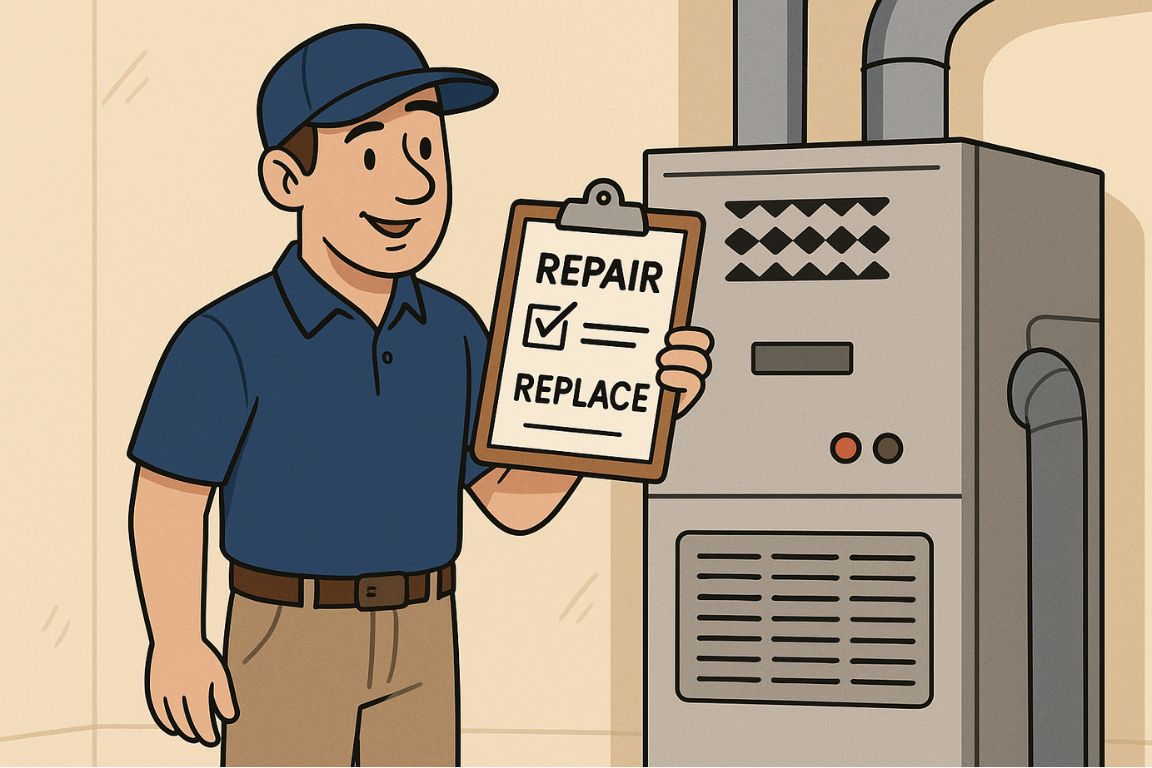
When the first cold nights hit in Great Falls, the last thing you want is to deal with a furnace replacement and being without heat. At Halcro Heating and Cooling, we know that homeowners often face a tough decision this time of year: should you keep repairing your old system, or is it finally time to replace it? We believe in giving straightforward, honest advice and don’t push for the most expensive option. Here’s how to tell the difference between a smart repair and a worthwhile replacement before winter sets in.
Table of Contents
1. How Old Is Your System?
While age isn’t the only criteria, it should be considered along side the other signs discussed her. Most furnaces last between 15 and 20 years when they’ve been well maintained. If yours is nearing or past that range, repairs can become more frequent and more costly. Parts may be harder to find, and older units can be less safe and efficient. In that case, replacement often gives you better long-term value, especially when paired with newer high-efficiency models that can lower your energy bills in Montana’s long heating season.
If your furnace is under 10 years old and otherwise in good condition, repairing it usually makes sense. You’ll likely get more years of reliable heat with basic maintenance and the occasional part replacement.
2. The 50% Rule: Repair vs. Replacement Costs
Here’s a simple rule of thumb we often share with our customers:
If a repair costs more than half the price of a new furnace, it’s probably better to replace it.
For example, if your repair estimate is around $2,000 and a new, efficient model would cost $4,000, it makes more sense to invest in the new system. You’ll get a fresh warranty, lower monthly heating costs, and fewer service calls down the road.
3. Rising Energy Bills or Uneven Heating
If your furnace seems to be working harder each year but your home still feels chilly in some rooms, it’s a sign of declining efficiency. You may notice your energy bills slowly increasing, or your system running longer to keep up.
Sometimes, this can be solved with a tune-up, filter change, or ductwork fix. But if those steps don’t help, it’s often because the system itself is wearing out. In that case, a replacement can pay for itself over time through lower utility costs and a more even, comfortable home temperature.
4. Frequent Repairs or Strange Noises
A single repair doesn’t mean your furnace is failing. However, if you’ve had to call for service multiple times over the past few years or if you’re hearing rattling, banging, or grinding, then the mechanical parts may be reaching the end of their lifespan.
A pattern of recurring breakdowns could signal that more failures are on the way. Rather than spending more on patchwork fixes, putting that money toward a replacement is the more dependable and forward thinking choice.
5. Safety Concerns You Shouldn’t Ignore
If our technicians detect a cracked heat exchanger or signs of carbon monoxide, that’s not something to take lightly. Older furnaces are more likely to develop these issues, which can pose real safety risks. In those cases, replacement isn’t about convenience, it’s about keeping your household safe.
Our Honest Approach
At Halcro Heating and Cooling, our recommendation will always come down to what’s best for you, not what’s most profitable for us. If your system can be safely and reliably repaired, we’ll fix it. If replacement truly makes more sense, we’ll explain why, show you the options, and make sure you understand the pros and cons before moving forward.
You deserve clear answers and peace of mind before the coldest days hit.
Local Advice and Service
If you’re unsure whether your furnace should be repaired or replaced this season, schedule a professional inspection with Halcro Heating and Cooling. We’ll assess your system honestly and help you make the choice that keeps your home safe, warm, and efficient all winter long.